These days, having fantastic food is no longer enough, and some diners look for either dining paired with performances or something we call immersive dining. Having been to 2 immersive dining experiences, Andsoforth and Absurdities, I was very interested in Jeju Haenyeo since it centred around Korean Cuisine and immersive storytelling
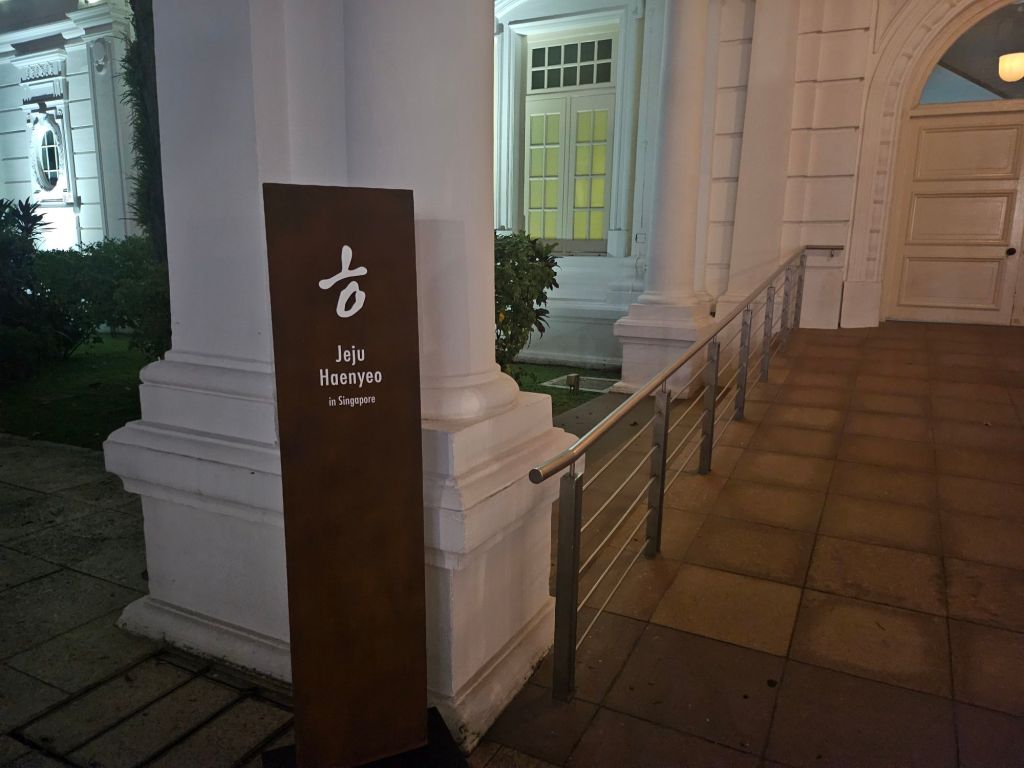
Located within the Art House Building, the restaurant is quite obscure to the public, with only 1 signboard giving diners a hint of where the entry to the restaurant is located
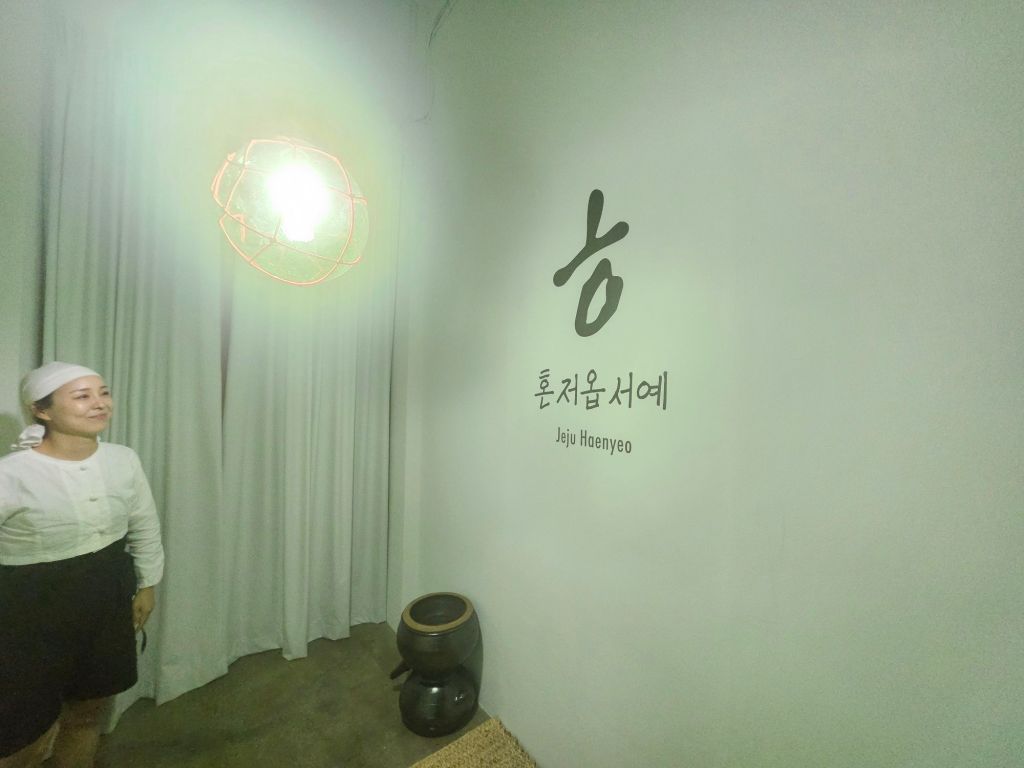
Instead of the usual restaurant setup, it felt more like a museum exhibition space, which was converted into a dining experience. Sectioned off with heavy drape curtains, a small reception area was carved out to host guests before the seating commences
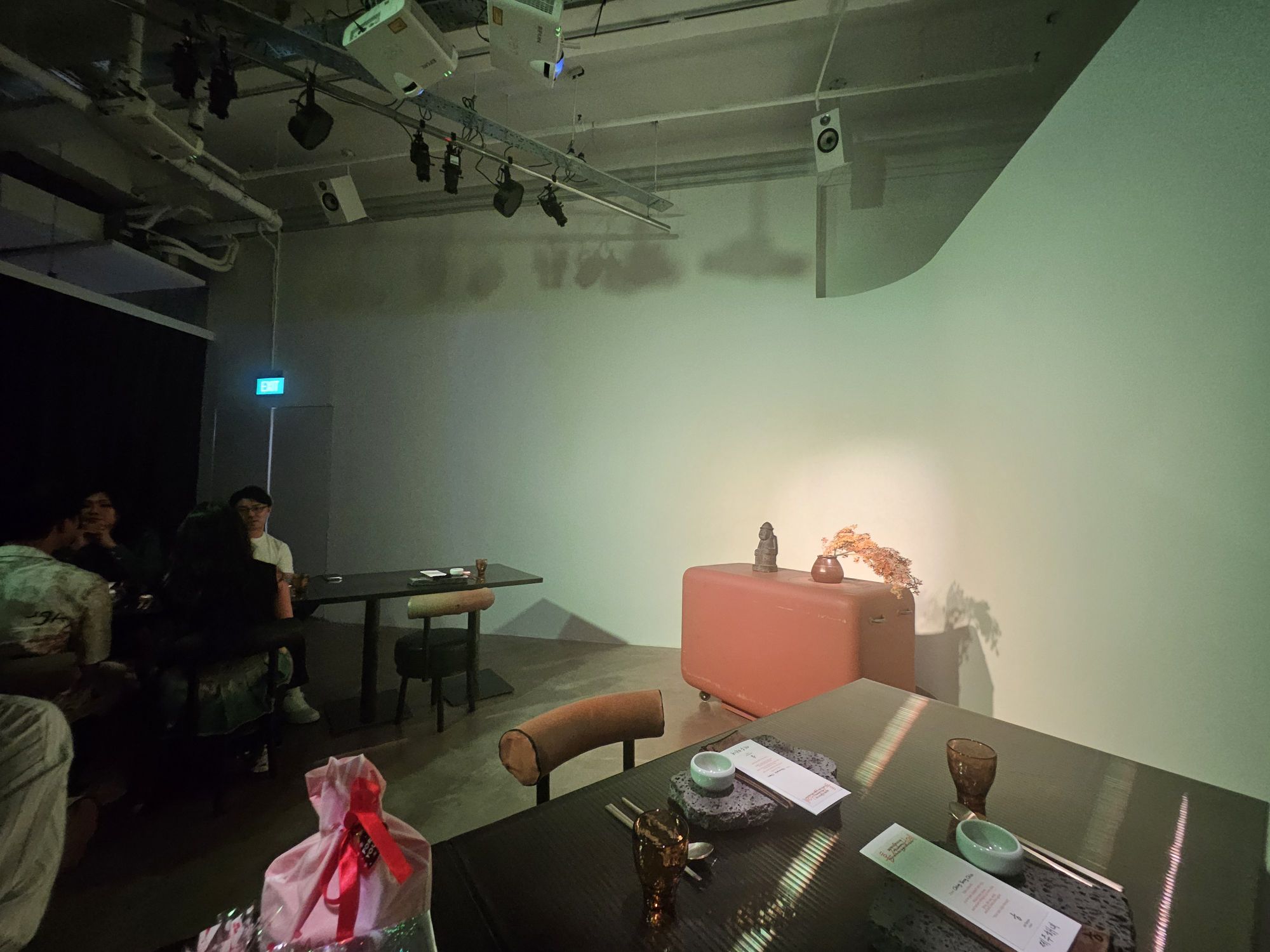
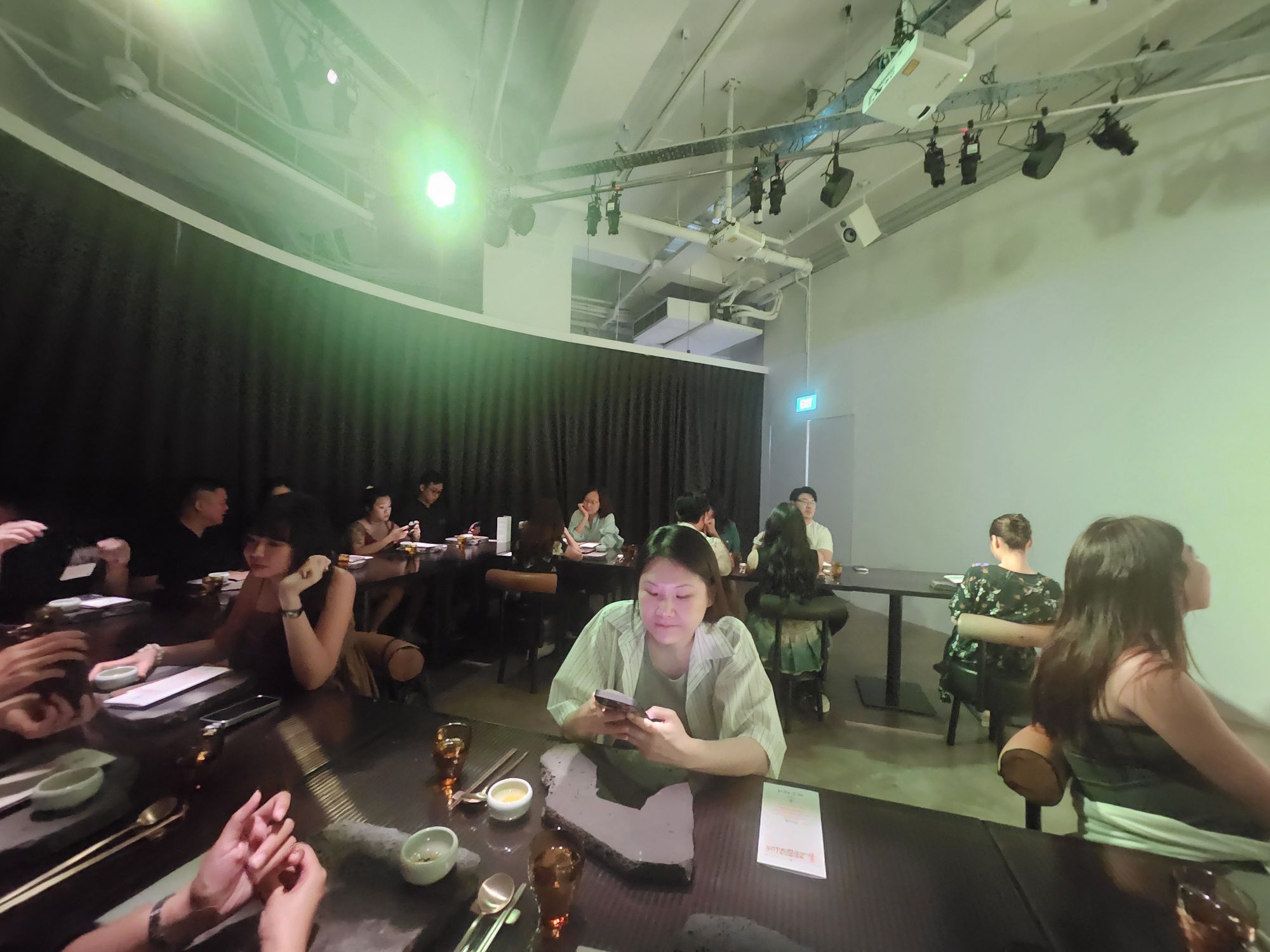
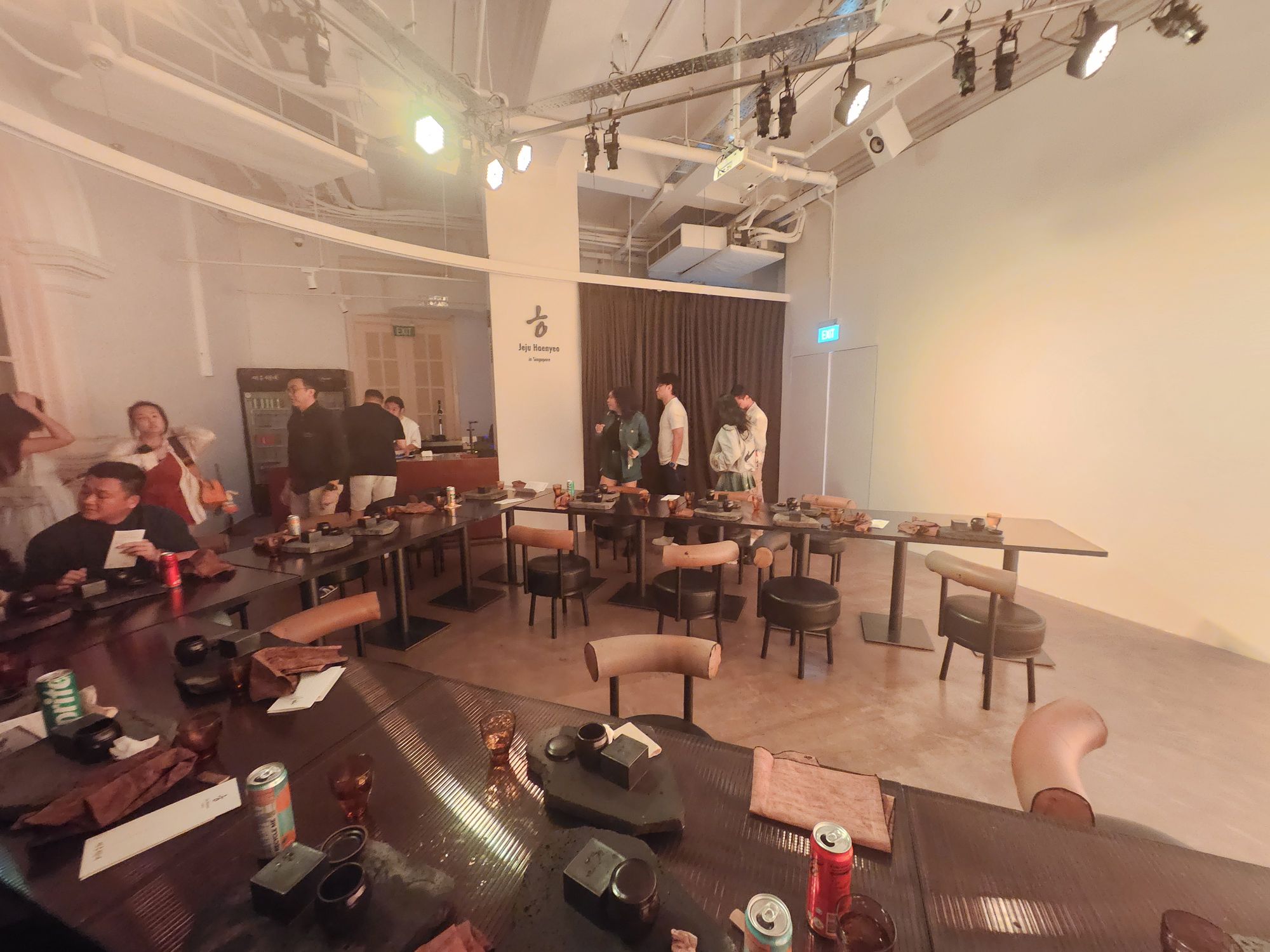
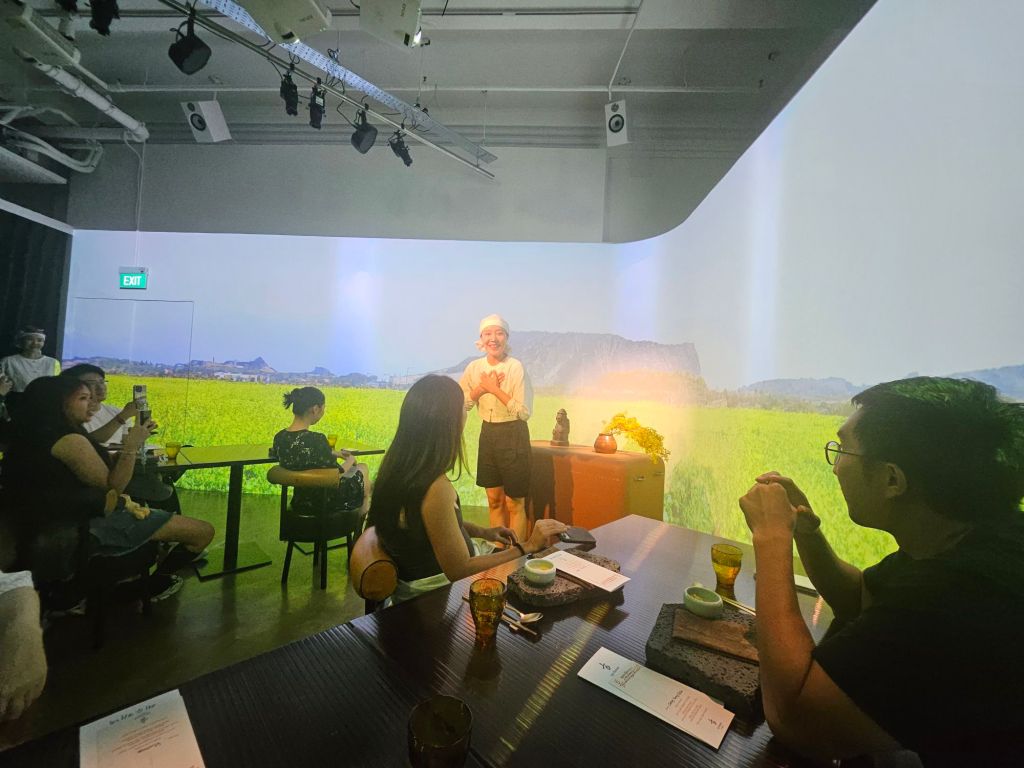
Beyond the first set of curtains, we were then led into another white space with tables arranged to face a white wall, which would act as the canvas for the whole dinner performance. Seating is limited, and it is a reservations-only experience
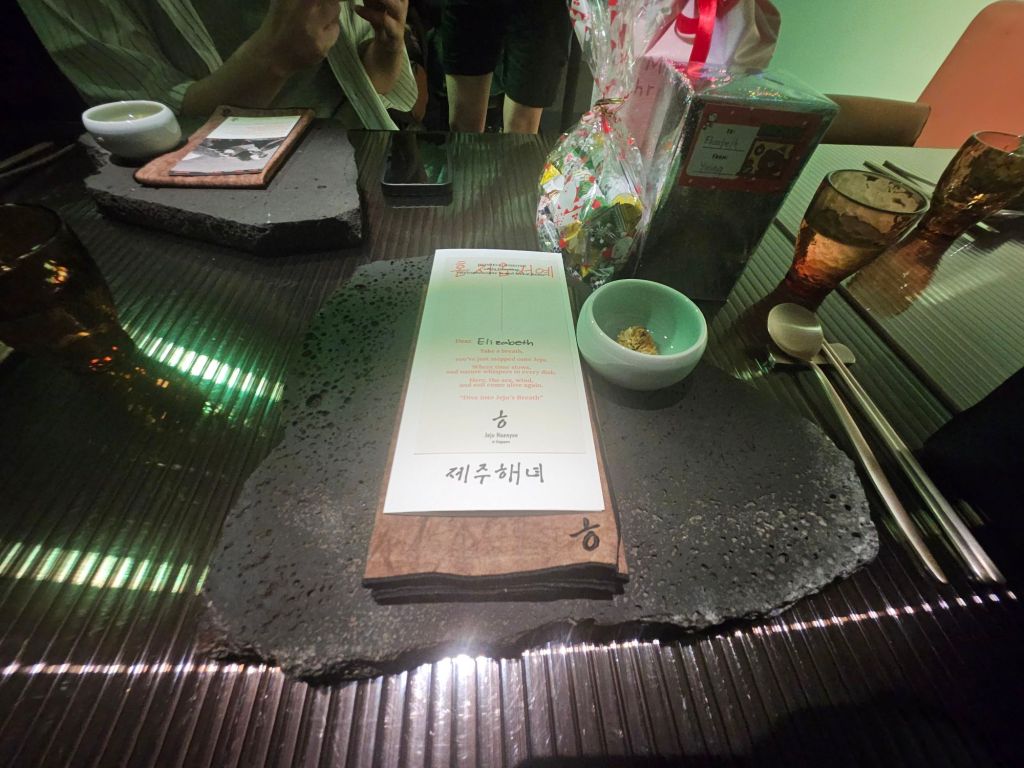
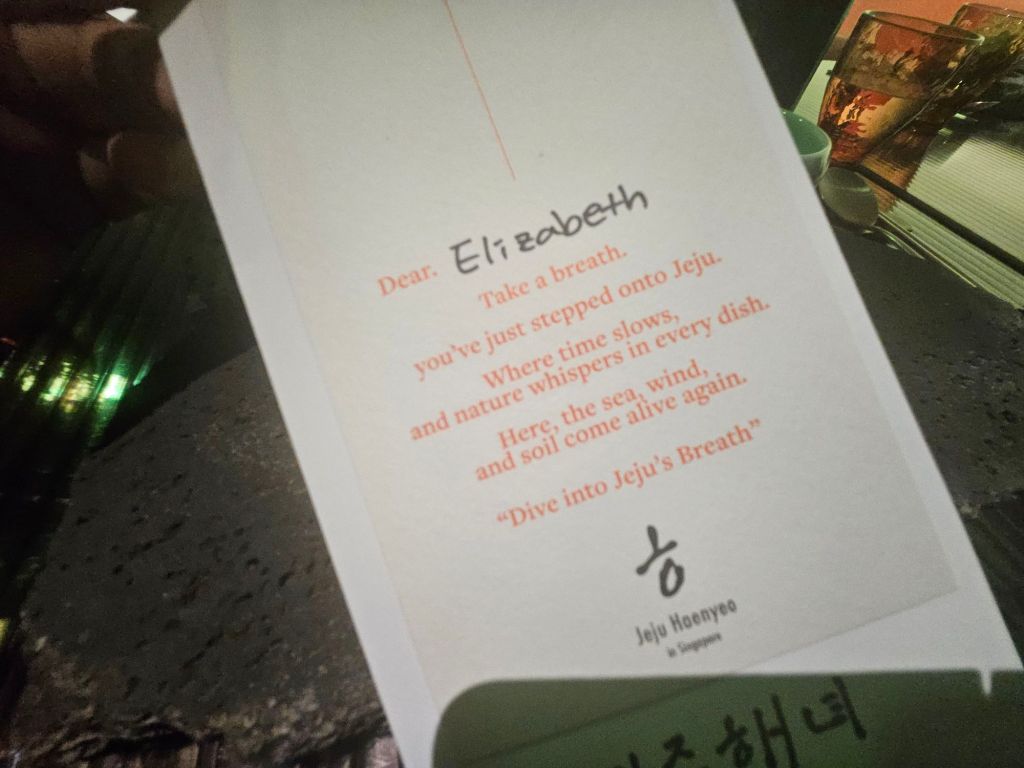
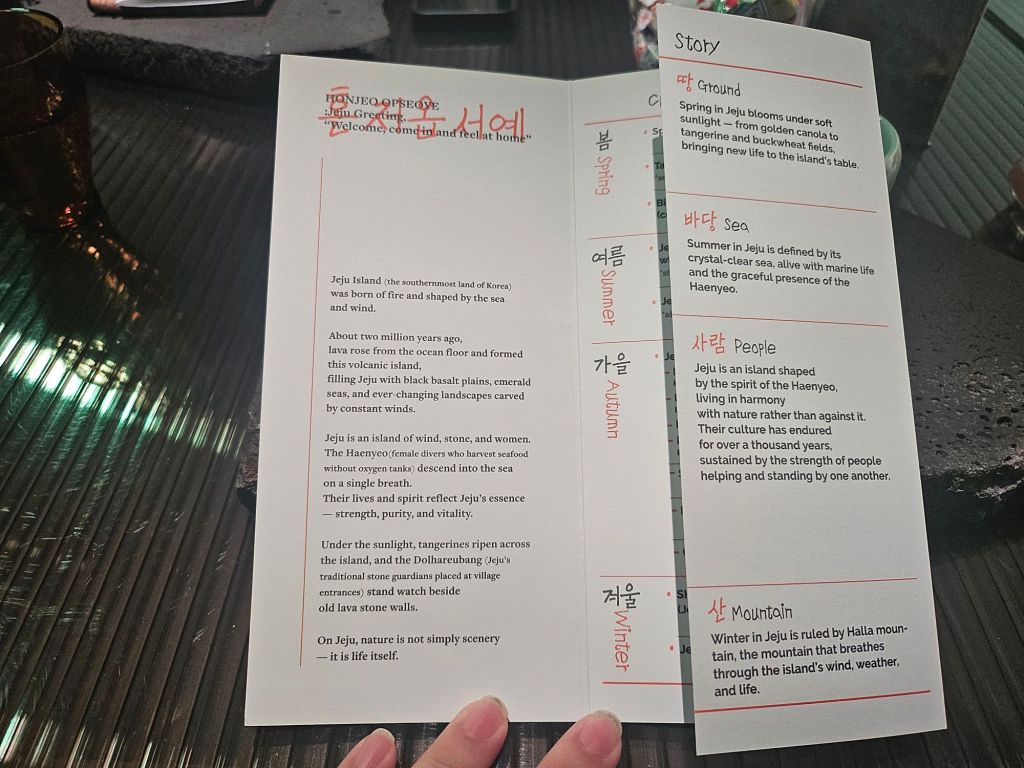
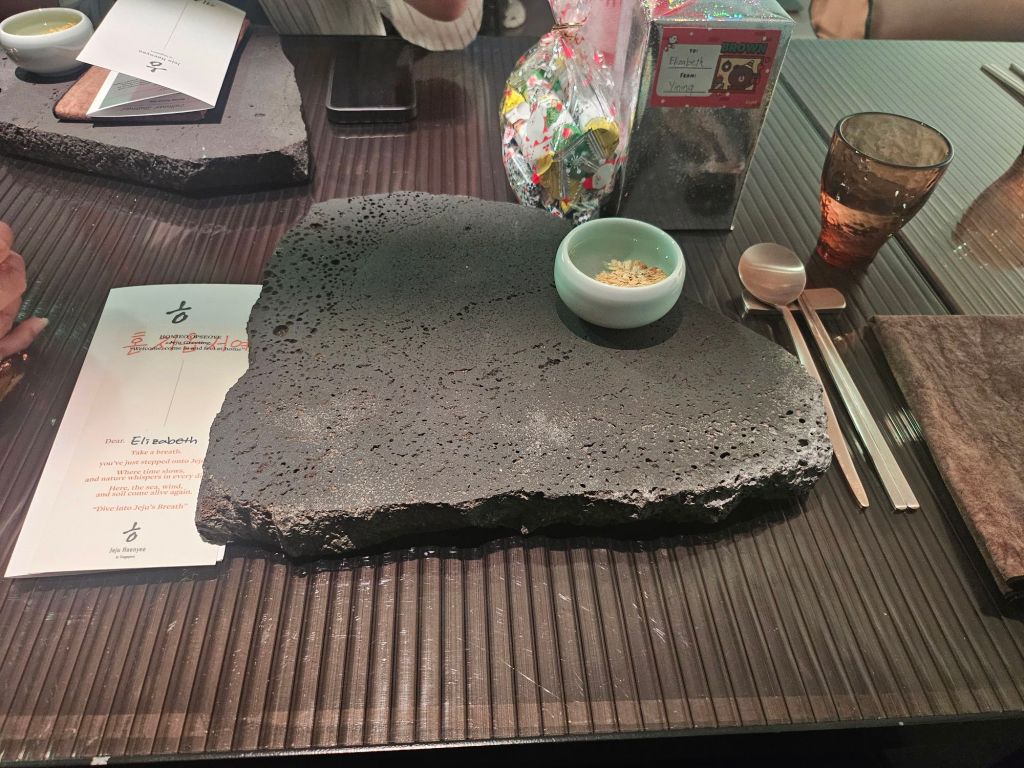
Each seat was set up with a piece of stone as the placemat, which reminded me of the Jeju volcanic stone, and a welcome note addressed to each guest with their name. Another brochure was placed on the table, which explains the storyline of the whole experience today. Together with the performance, dishes and videos, they will showcase highlights of Jeju through the different seasons as well as the key elements of the island like the sea, people, mountain and the ground, which are all connected to form the spirit of Jeju island
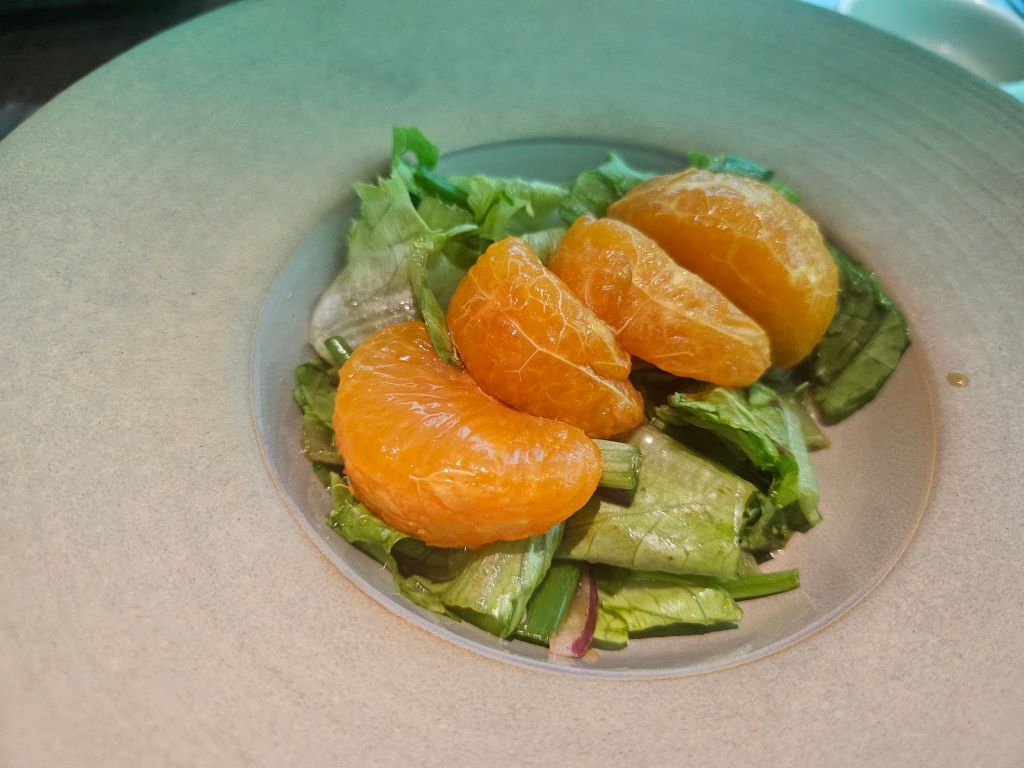
The dining experience starts us off with an introduction from the staff, who are all trained in theatre and performance. The co-founder, who did part of the introduction, grew up in Jeju, and she wanted to spread the beauty of Jeju and its cuisine because of the cultural nuances that make Jeju cuisine different from the rest of Korea. While most people are used to the usual Korean food, not everyone understands the difference in Jeju food. We started off with the Spring season salad, where all ingredients are fresh and include fruits like the hallabong, which is a kind of orange unique to Jeju. Without heavy dressing, the salad was light, savoury, sweet and citrusy from the orange slices. It did a great job of whetting our appetite for the rest of the course
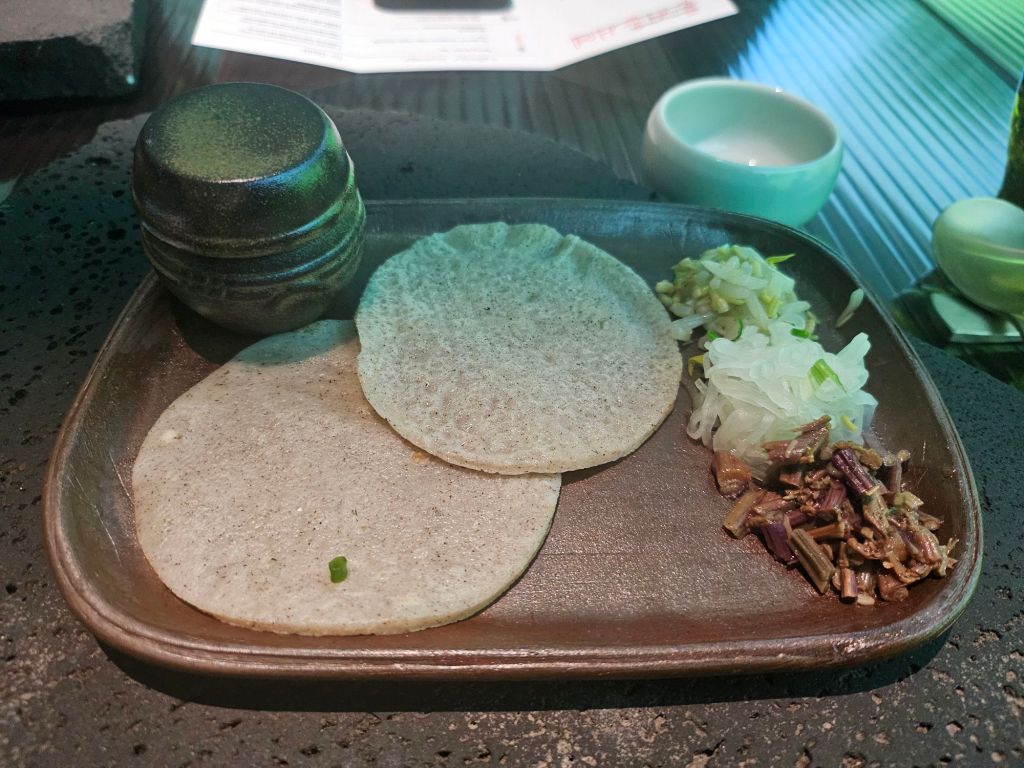
We also had the Korean buckwheat pancake, known as Bing-tteok, which showcases local ingredients like buckwheat flour, radish, and summer vegetables from the ground. We wrap the ingredients into the thin pancake like a crepe before eating it. Other than seasoned radish, there was also mugwort and beansprouts and some seasoned burdock. The flavour of the pancake was simple and earthy, and very light on the stomach as there was no grease. It was a good introductory dish to layer the stomach before the heavy dishes
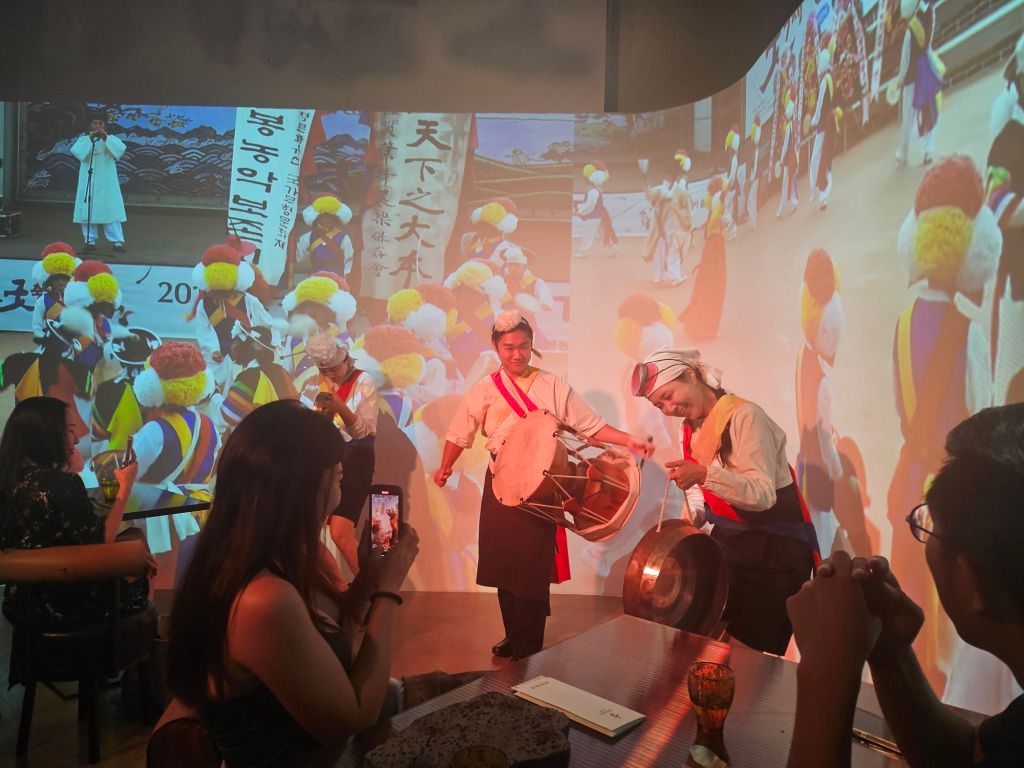
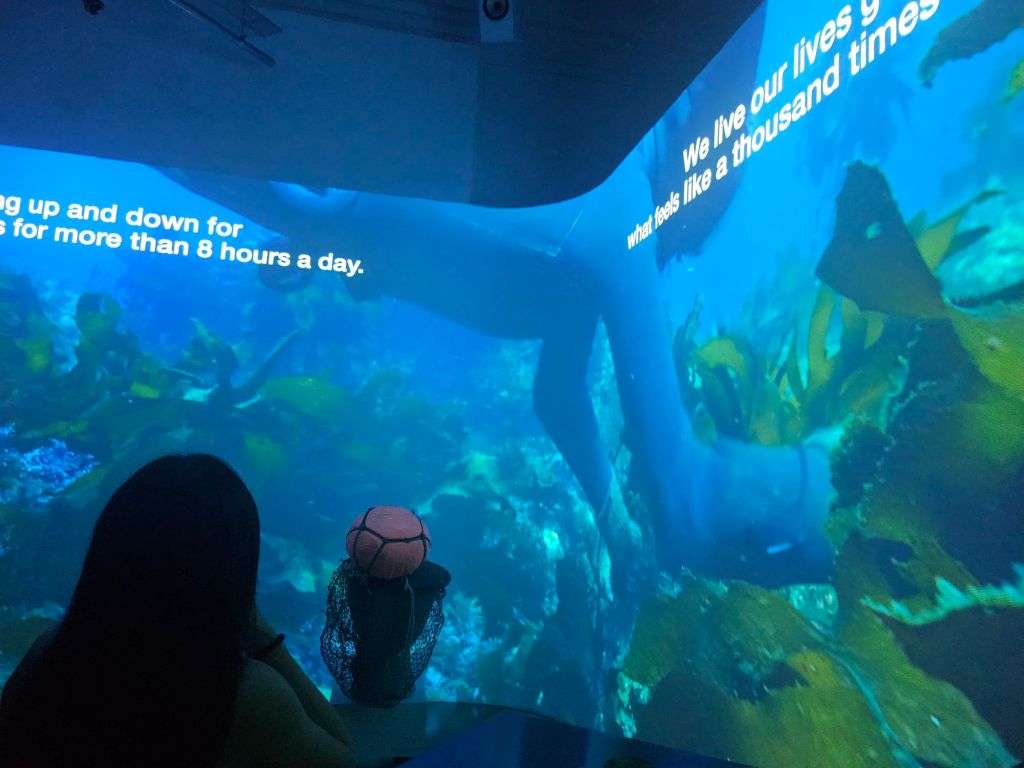
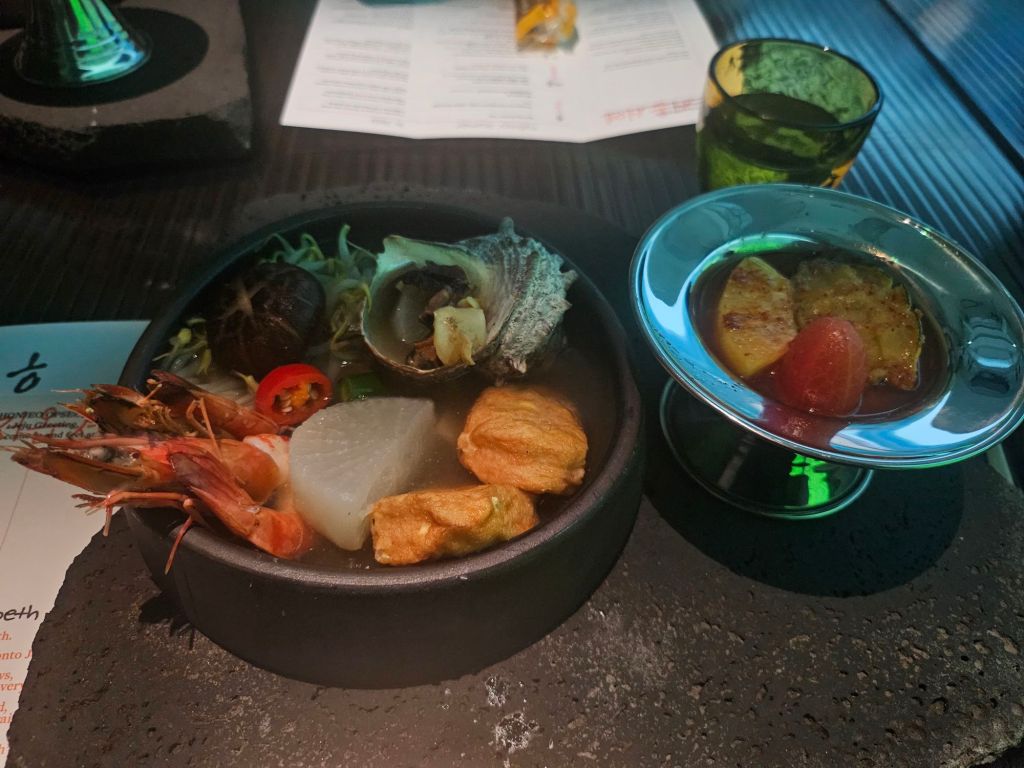
Next for summer, after a series of interesting videos about the life of Haenyeos, as well as sharing with us the festival performances in Jeju, we were served dishes from the sea, which included a Jeju seafood stew with mushrooms, tofu, radish and bean sprouts. On the side, there was also a pickled pineapple with tomato and abalone salad, which was savoury and tangy. The stew was packed with umami flavour, with a refreshing aftertaste from the radish and vegetables. The prawns and conch were fresh and bouncy, while the abalone in the salad was more chewy
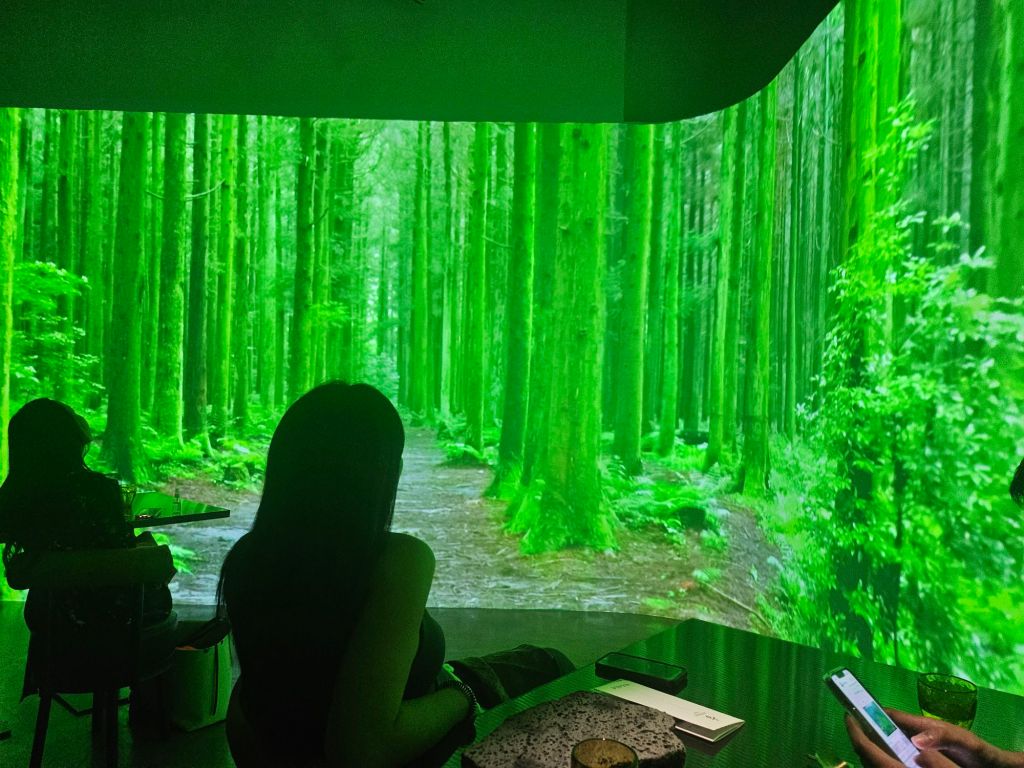
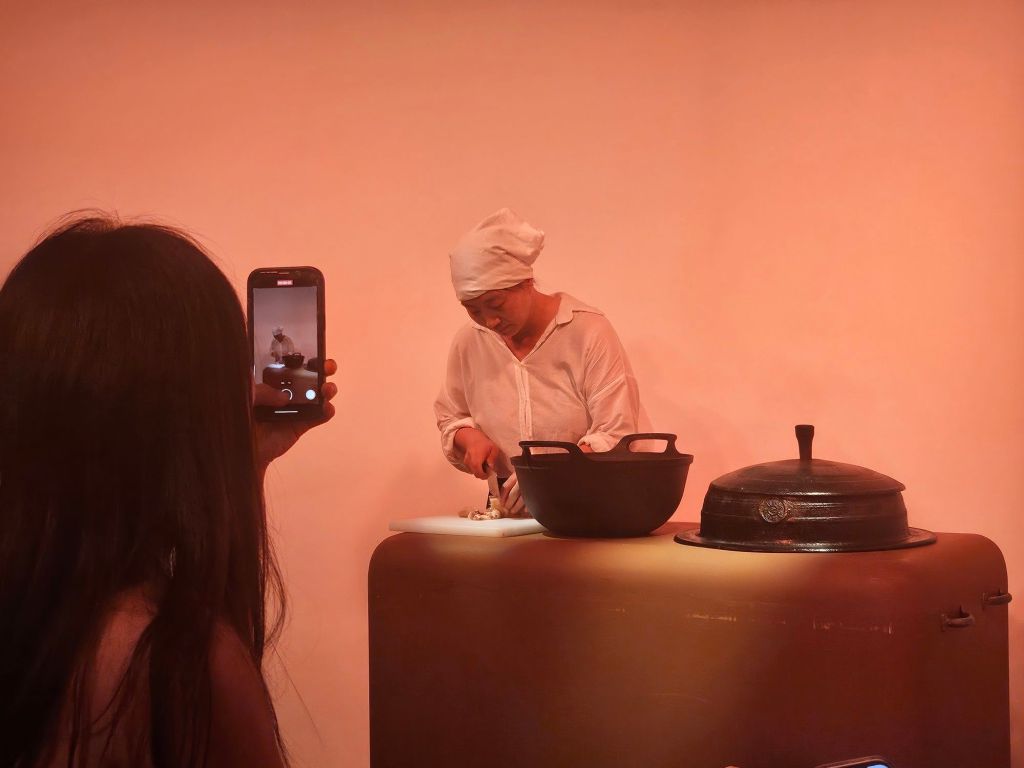
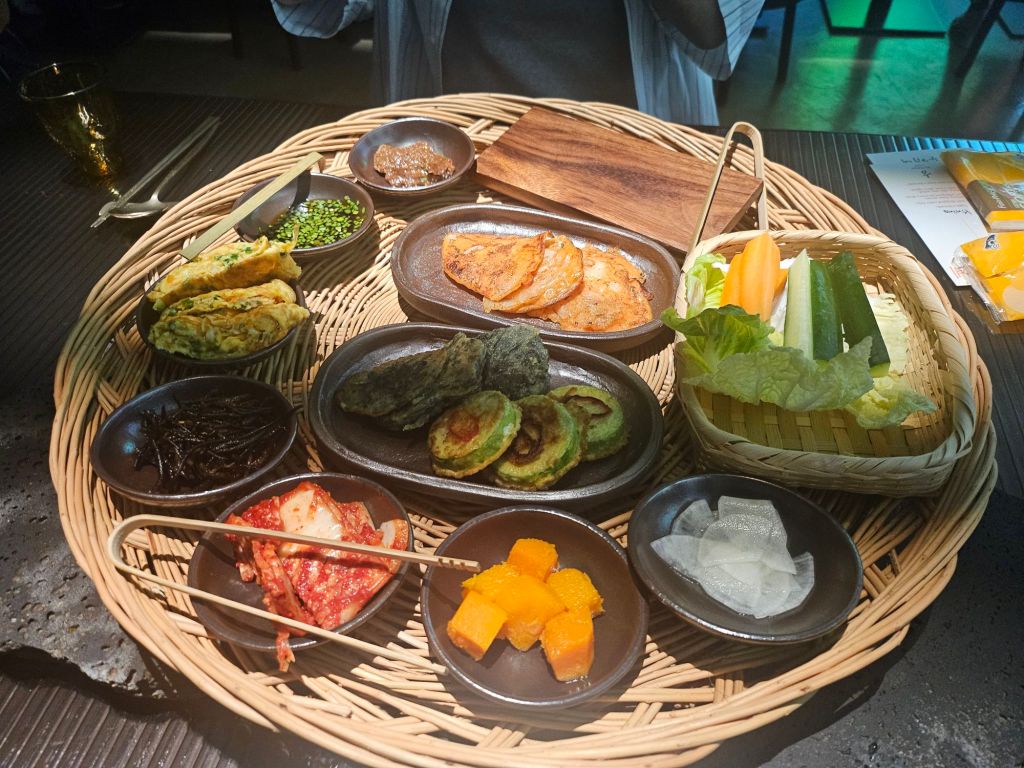
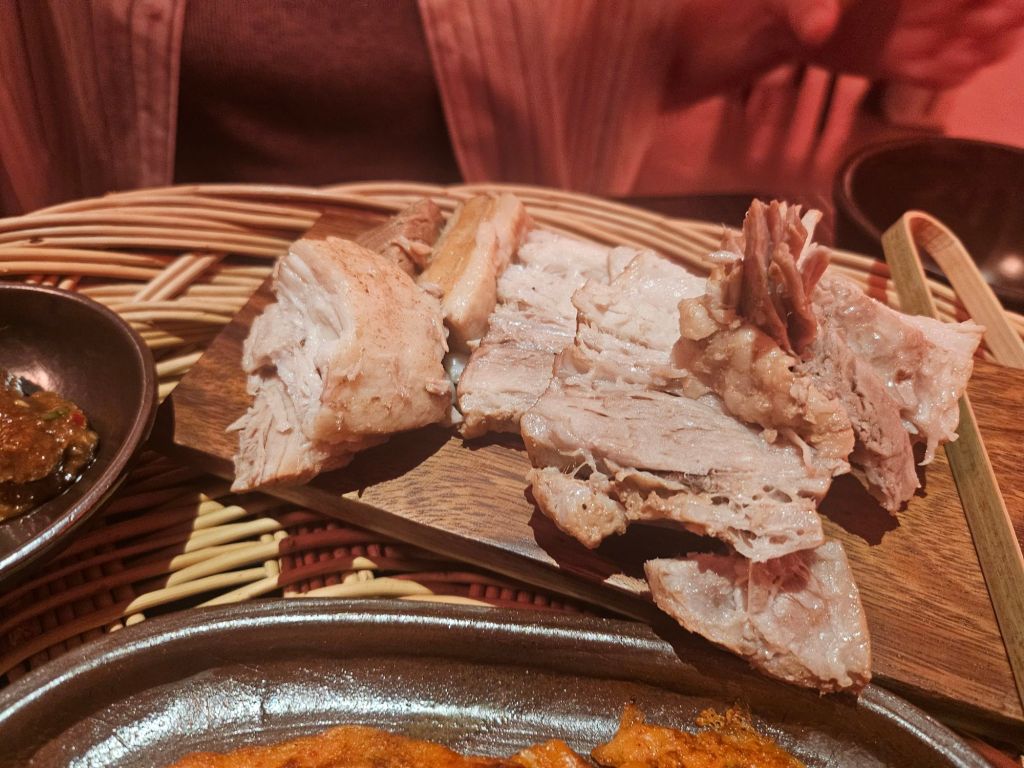
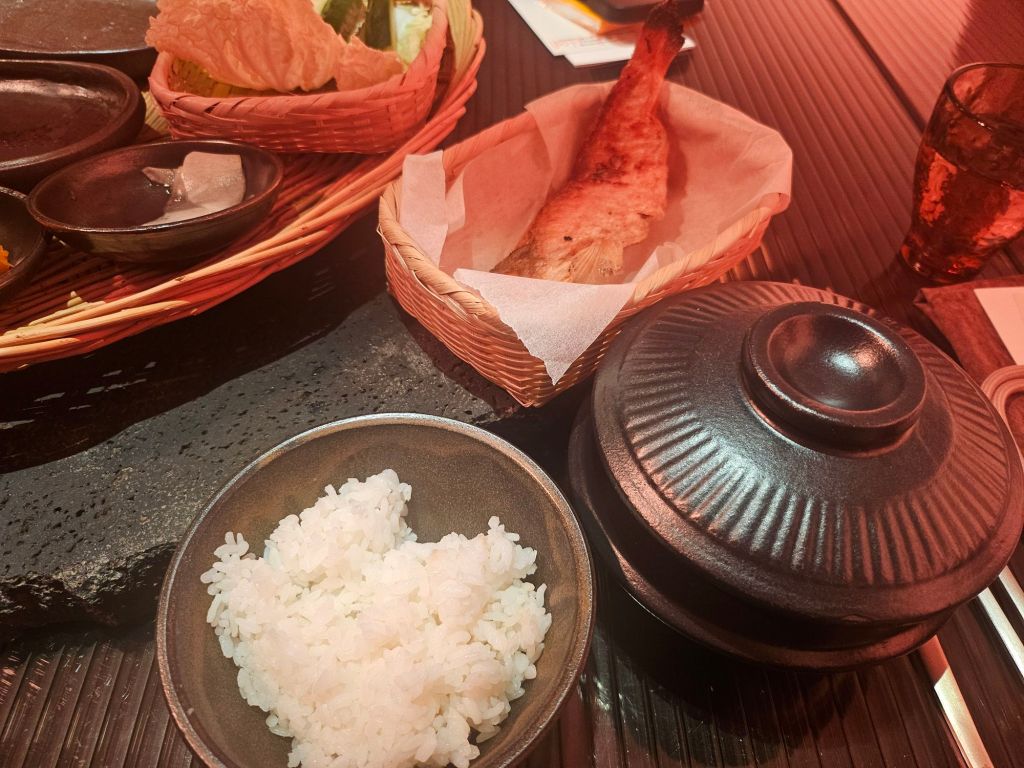
For the next season of Autumn, we were served a traditional Hansangcharim with banchan, meat, rice and soup. We were also served grilled tile fish and traditional deonjang soup. In the Hansangcharim, we were served side dishes like steamed pumpkin, pickled slices of radish, cabbage kimchi, seasoned seaweed, Gyeran-mari ( rolled omelette), kimchi jeon, vegetable jeon and raw vegetables, which can be eaten with the dip or used as a wrap for the pork. The pork was cooked in the traditional black pot til tender and soft, and was cut on the spot in front of the diners and served to each table. We probably looked hungry as the staff topped up our meat twice with mountains of meat. The tile fish was surprisingly sweet and tender, but had a lot of bones. I would usually give up on fish with bones, but the flavour of the tile fish was so nice, I patiently picked out the bones to enjoy it
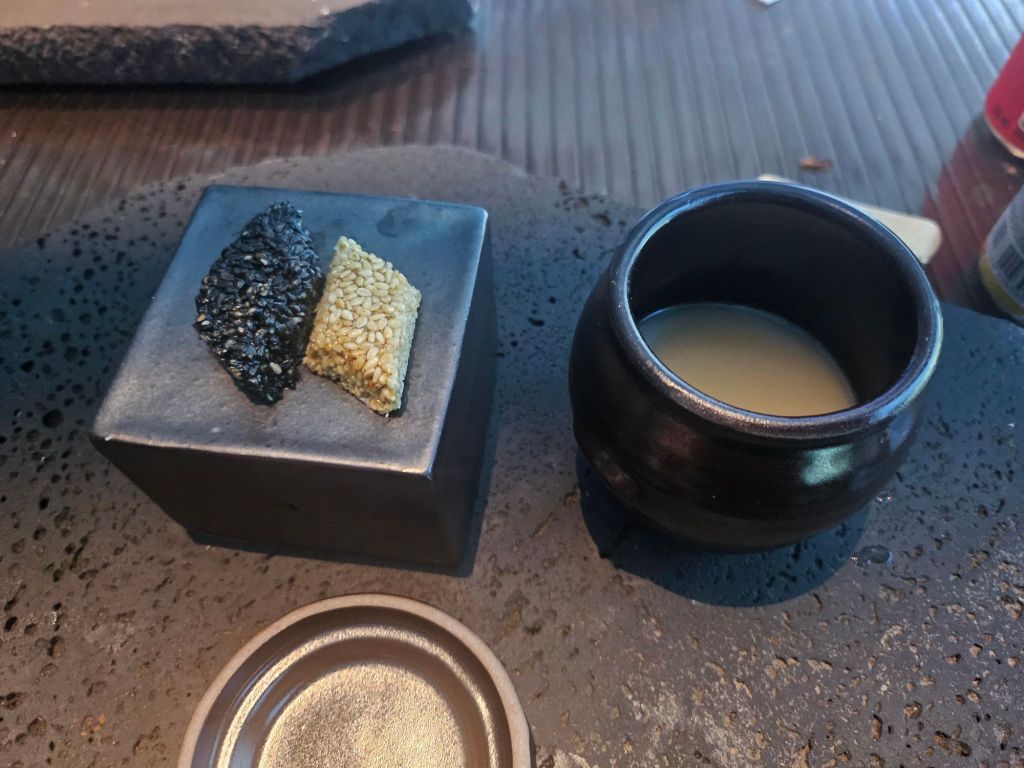
The final course depicting Winter was the desserts, which included 2 types of rice cake and a cup of rice wine, Makgoli. One of them was dipped in black sesame, while the other was white sesame. The rice cake was soft and chewy with a strong nutty flavour from the sesame seeds, while the lightly sweet makgoli helped to wash down the sweetness of the dessert
Overall, it was an extremely enjoyable experience, and since I visited them on the 2nd week of their opening, the staff were still getting used to the unusually quiet Singapore crowd. The entire meal took close to 2 hours, bringing to life Jeju’s food, philosophy, tradition and spirit. The dishes were created using only traditional recipes rooted in centuries-old Haenyeo culture and ingredients from local farmers, fishermen and haenyeos, which is a great way of contributing back to the community
Address: 179429, Old Parliament Lane, 1号, The Arts House Annex Building, #01-04
Opening hours: 11.30 am to 11 pm and 12 pm to 11 pm on Sat and Sun ( Closed on Mon and Tue)


